This is not a weekly theme post! I decided I wanted to talk about seasonal wardrobes and my inability to embrace the capsule lifestyle.
Some quick definitions:
Seasonal wardrobe is pretty straightforward. Collection of clothes you wear for a specific season and put away for other seasons. For me, I break my seasonal wardrobes into two: Fall/Winter, Spring/Summer.
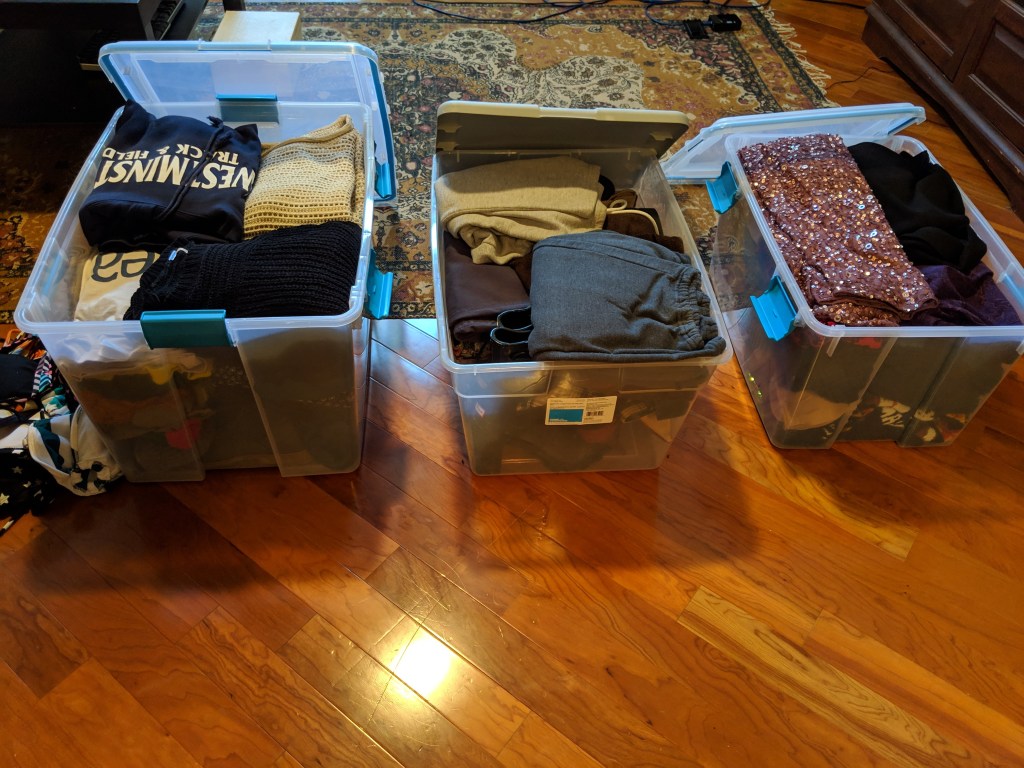
Below is evidence of my fall/winter storage bins:
A capsule wardrobe is a small collection of basic, essential items that will never go out of fashion and never need to be put into storage for a season. To some extent, we all have capsule wardrobes. Most of us own white t-shirts, a pair of blue or black jeans, and a ballet flat. These are the types of pieces expected to be included in a capsule wardrobe. Where I diverge from this is my rampant and inexcusable caprice in style preferences. About every 12 months I make significant, sweeping changes to my fashion interests. Which means that even my most basic items (there are some exceptions to this) become absolutely uninteresting and unwearable to me.
What many people do is a combination of these two wardrobe styles. You have a capsule wardrobe that you wear all year-round, and you seasonally rotate pieces to supplement.
Now, because of my job, I have a larger capsule wardrobe than I’ve ever had before. There are neutral button-up shirts, shift dresses, and work pants that I will always have available to me, as needed for work. However, my non-work clothes are almost entirely seasonal. Other than black skinny jeans and t-shirts, I rotate out pants, skirts, dresses, tops, jackets, shoes, shorts, sweaters, even socks for my two seasons.
The world is moving towards non-seasonal wardrobes. Which makes sense. Weather is weird now. It can be incredibly cold one day, then hot the next. Also, seasonal fashion collections have changed. It’s no longer ‘pastels in Spring’ and ‘merlots in Fall’. Fashion houses/designers have moved away from these restrictive color palettes. But I’ve maintained my seasonal wardrobe for several reasons. 1) I literally don’t have enough space in my closet to have all my shoes out at the same time. 2) Seasonal wardrobe lets you basically have two completely unique wardrobes. It’s so much fun to change out your wardrobe and remember a piece that you haven’t seen in 6 months. And 3) To me, there’s something meaningful and symbolic about that seasonal transition. I love having a physical manifestation of the change. Spring/Summer Grace is a lighter, more fun version of Fall/Winter. I’m sure it’s some kind of larger subconscious metaphor for my views on life, death, and rebirth, etc.
What I’m ignoring in this conversation are the political and socioeconomic benefits of capsule wardrobes. Those that truly embrace a capsule wardrobe (as defined in the 1970s as a collection of a few essential items of clothing, more recent blog posts suggest this collection to be somewhere around the size of 40 pieces of clothing including shoes) greatly reduce their contribution to the harm fast fashion incurs on our world, both in the context of environmental impact and fast fashion’s detrimental effect on developing nations and their existing textile industries. This is a concept I struggle with, as both a self-aware, self-defined “citizen of the world” and a budget-conscious fashion enthusiast. I acknowledge this is something I don’t have a good answer for and don’t always take into account when I’m making clothing purchases or when I began the process of building up my wardrobe.
This post is neither a condemnation of capsule wardrobes nor an attempt to seduce you to the side of seasonal clothing storage. Everything is great. What works for you is the absolutely the best choice for you. Obviously my super-bummer previous paragraph might be something you want to take into account when you make future purchases. But, since spring is just around the corner, it felt appropriate to espouse and wax poetic on my wardrobe philosophies.
Thanks for reading!
 Themes on fashion